AI Academic Policies
As AI becomes more integrated into teaching and learning, Mizzou is establishing clear expectations for its use in the classroom. The MU Faculty Council on University Policy and the Graduate Faculty Senate have approved the AI Syllabus policy, the AI Use Scale policy, AI Grading and Feedback policy, and the AI Detection Tools policy to help faculty navigate the use of AI in instruction and assessment.
Recommendations for teaching writing
As AI writing tools evolve, a focus on the connection between writing and learning becomes even more crucial. To help combat misuse, CWP encourages instructors to highlight the ways that writing is a vehicle for learning content to establish a culture of academic integrity that prioritizes critical thinking. AI writing programs produce essay frames, but they do not include the discipline-specific elements of writing–i.e., voice, appropriate evidence and citation, and deep analysis–which make WI courses powerful learning experiences.
Practically, instructors can take GenAI into consideration by:
- Designing assignments that involve producing and analyzing AI-generated writing to examine the strengths and weaknesses it displays
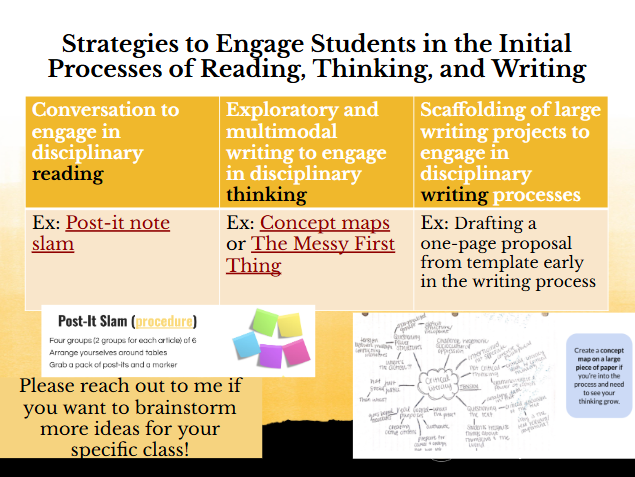
- Engaging students in the process of writing by requiring students to submit steps of the essay generation process (e.g., proposal, outline, essay introduction, source summary/comment on use) and receive feedback on those steps to build the complete draft
- Increasing use of in-class writing–both informal writing for learning and formal writing for assessment
- Requiring students to include specific evidence (ex: course readings, peer-reviewed articles, or a specific set of sources provided to students) in their writing assignments.
- Expanding the genres and modes of assigned student writing. Consider asking students to produce a multimodal or multimedia text (ex: podcast, infographic, map, animation)
AI Resources for WI Instructors from CWP:
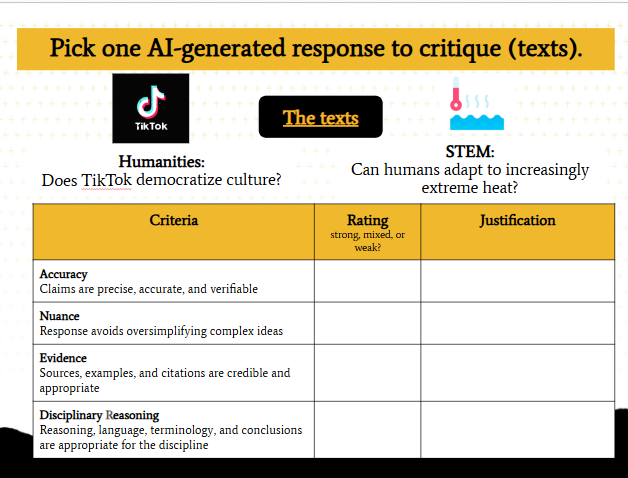
Questioning the Bot: Teaching Critical Thinking with AI
If you’re considering asking students to generate AI output, here’s an example activity to help them think critically about the generated response.
AI in WI: Writing and Thinking Through Our Disciplinary Lenses
What are specific ways of thinking and/or skills you want students to get out of your courses? Which of these thinking practices or skills are better developed in collaboration with AI? Which are better developed apart from AI?
This series of resources asks instructors to carefully consider their teaching strategies.
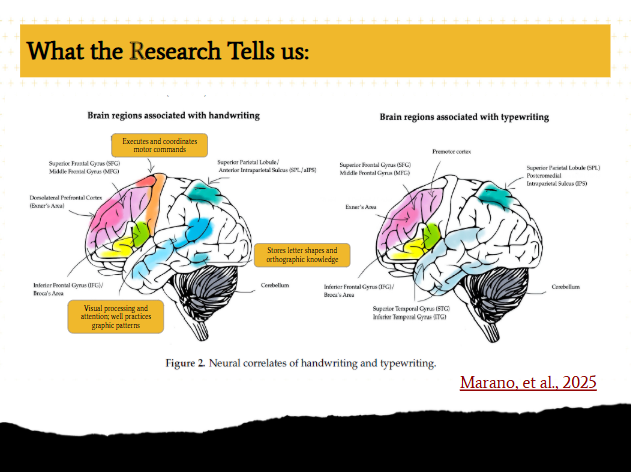
The Power of Handwriting: Fostering Authentic Engagement in WI Courses
Instructors are beginning to add more and more in class writing as a way to help students engage more deeply with the process of writing. In the attached slides below, find more resources to help you explain to your students why you are adding more handwriting to your course – not just to combat AI use but to also lead to deeper thinking.
In this Substack article, Adam Pryor discusses 7 patterns or strategies that instructors can add to their courses to redesign assignment that are designed to be AI resilient not by blocking the use but by making AI irrelevant to the task.
Some strategy highlights that the CWP really thinks would be useful in many WI courses:
- Ask students to build artifacts by presenting their messy concept maps or drawings that capture the students process of making choices and spatial reasoning.
- Rather than requiring students to reply to peers on a discussion board, instead ask students to pull out the dominant themes of all their peers’ responses and find one critical perspective missed by the class.
- Students turn in all the versions of their writing in a form of Show their Work protocol. This allows instructors to further see the students’ process throughout their writing.
Access the full article on Substack from Purposeful AI.
“The AI didn’t break our pedagogy; it merely revealed that the pedagogy was already broken. If a machine can effortlessly pass your assessment, your assessment was testing mechanical compliance, not human cognition”
Adam Pryor, Purposeful AI
Any Questions?
Reach out to the Campus Writing Program and we’d be happy to sit down with you to discuss what GenAI means for your classroom.